 Back and Next - Back and Next
GLOBAL: Awareness "key to ending discrimination"
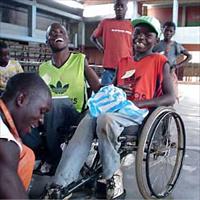
In any disaster, many of those affected are often forgotten for various reasons but there are others, like women, the aged or those with disabilities who, because of their vulnerability, are often deliberately discriminated against.
In a recent report, the International Federation of Red Cross and Red Crescent Societies says governments and relief organizations require greater awareness to help reduce discrimination of such vulnerable groups during humanitarian emergencies.
"Discrimination in an emergency setting is life-threatening," the Federation says in the 2007 World Disasters Report, which focuses on discrimination. "Discrimination affects not only people's ability to survive the crisis, but also to recover and to regain their livelihoods afterwards."
The report examines discrimination based on gender, ethnicity, age and disability, and proposes ways and means of curbing discrimination of already marginalized groups and other vulnerable sections of society.
"Not only does already-embedded discrimination put vulnerable individuals at greater risk in a crisis, but sometimes governments and aid agencies themselves are guilty of discrimination, albeit unintentional," the Federation says.
Dialogue, openness and understanding are crucial in countering the discrimination faced by those already marginalized, the report notes.
Marrku Niskala, the Federation's secretary-general, says in the forward of the report: "Aid agencies need to work to change attitudes, ensure inclusion and advocate. Discrimination thrives in the shadows; we need to chase those shadows away."
The report questions whether existing legislation protecting the rights of the vulnerable, such as the elderly, women and girls, minority groups and people with disabilities, is enough.
"There is no universal definition of discrimination in international law," the Federation says. "Some conventions address it within the context of a particular group, but neither the Universal Declaration of Human Rights nor the United Nations International Covenant defines it."
According to the UN Convention on the Elimination of All Forms of Discrimination Against Women as well as the International Convention on the Elimination of All Forms of Racial Discrimination, gender and racial discrimination is defined as any distinction, exclusion, restriction or preference based on gender, race or colour, with the purpose or effect of nullifying or impairing the recognition, enjoyment or exercise, on an equal footing, of human rights and fundamental freedoms in the political, economic, social, cultural r any other field of public life.
In its report, the Federation says the first steps in addressing discrimination in disaster situations should occur before emergencies happen.
"Risk reduction and preparedness are as much a part of the process as any aspect of disasters," it says. "Preventing discrimination - and changing attitudes - has to be the first priority. Advocacy and community development are needed to make vulnerability more visible.
The Federation recommends that greater effort be made to map discrimination in crises, "and guidelines need to be shared through the humanitarian system".
Overall, the report assesses and analyses discrimination as it relates to different groups and makes recommendations specific to each group. However, it lists several recommendations that cut across all the groups. These include encouraging and supporting countries to conduct accurate census of their population to identify those at risk of discrimination and urging the international community to agree on clear definitions of all potential minority groups.
"Aid agencies need to improve initial needs assessments by sharing information, learning from experience and developing common indicators on the impact of discrimination," the Federation recommends. "Minority and vulnerable groups need to be supported and enabled to participate in the planning, design and implementation of all emergency and non-emergency programmes."
 See Also - See Also
See Also
- Tostan Armed to Empower the Powerless – Says Deputy Director
- SOMALIA: Prime minister to name new, leaner cabinet
- Convention on the Elimination of all forms of Discrimination Against Women
- MALAWI: Government proposes mandatory HIV test for pregnant women
- SWAZILAND: Risky business: report sheds new light on sex trade