 Back and Next - Back and Next
CHAD: Refugees waiting for HIV services
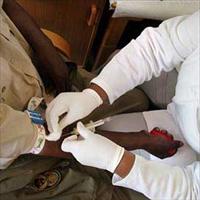
Most of the roughly 50,000 people in the Amboko and Dosseye refugee camps near Goré, in the tropical forest of southern Chad, have fled across the border from neighbouring Central African Republic (CAR), but efforts to prevent and treat HIV among the camp residents are still in their infancy.
The CAR has an HIV prevalence rate of 10.7 percent, the highest in central Africa, but southern Chad is not far behind. In 2005, official figures put HIV infection at 9.8 percent in Eastern Logone Region, where Goré is situated, the highest level in a country with a national prevalence of 3.3 percent.
In the absence of voluntary counselling and HIV testing (VCT) services in the camps, it is difficult to estimate how many of the refugees may be infected, but staff at camp health centres report that sexually transmitted infections (STIs) are among the most common complaints they treat.
Statistics gathered by the Italian non-governmental organisation, COOPI (Cooperazione Internazionale), which carries out development programmes and emergency interventions in developing countries, show that STIs are much more common among the more than 12,000 Central African refugees at Amboko camp, most of whom have been there since 2003.
At Amboko camp's health centres, 41 percent of patients had STIs, compared to just 4 percent at Dosseye camp, where residents are mainly new arrivals.
Dr André Kapend, HIV/AIDS Coordinator for the Office of the UN High Commissioner for Refugees (UNHCR) in Chad, said condoms and information about HIV are included in the treatment patients received for STIs.
In cases of suspected HIV/AIDS, patients are referred to Goré district hospital, the only health facility in the region that can do HIV testing, except when they run out of rapid testing kits, as was the case when IRIN/PlusNews visited.
Patients with HIV-positive results have to travel about 150km to the hospital in Moundou, one of the main towns in southern Chad, where a laboratory test can confirm the results of the rapid test. Moundou is also the only town in the region where antiretroviral (ARV) drugs are available.
With support from UNHCR, COOPI plans to introduce VCT services at the camps in the near future but until testing and treatment services become available, UNHCR and its partners are focusing on prevention.
Health workers at the camps have received training on how to avoid accidental HIV transmission through contact with contaminated blood or fluid, and the health centres are equipped with sterile syringes and gloves, but they can usually only speculate about which deaths in the camps are AIDS-related.
Condoms have been distributed with varying degress of success. Roger Djingar, who works at Amboko camp's health centre, described high levels of awareness about HIV and AIDS among the camp residents.
"These people come from towns and villages in [CAR] where everyone has heard of it [HIV/AIDS]; even children can answer questions [about it]," he said. "People take the condoms when we give them out and even come asking for them at night - men and women both."
The same level of knowledge and openness is less common in Dosseye camp, where most residents are Peul, a semi-nomadic Muslim people who come from remote areas of the CAR. Condom use is low among them, and even speaking about sexuality discouraged.
"When we talk about sex, even if we just say the word, people are embarrassed, so they get up and leave. These are people from the bush and this is not something that is talked about there," said Ferdinand Beasmang, a young refugee who has become a peer educator in the camp.
Another sensitive issue in HIV prevention is how to assist victims of sexual violence. There are no figures on the frequency of such violence in the camps but there have been attacks, often on refugee Peul women fetching firewood and water.
"Peul women want to go out into the bush to gather firewood, but some get attacked because they are alone," confirmed Aminatou Abdoulaye, 19, a refugee from CAR.
The United Nations Population Fund (UNFPA) has started committees in the camps to counteract sexual violence, and also provides post-exposure prophylactic (PEP) kits, which reduce the risk of HIV infection if administered within 72 hours of the rape.
 See Also - See Also