 Back and Next - Back and Next
DR Congo: Civilians under attack need urgent protection
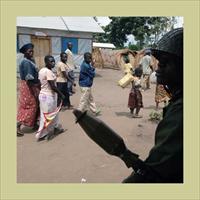
United Nations Secretary-General Ban Ki-moon and other African and international leaders meeting in Nairobi, Kenya, this weekend should take immediate action to protect civilians who are at severe risk in eastern Congo, ten human rights and humanitarian agencies, including Human Rights Watch, Oxfam, ENOUGH and the Norwegian Refugee Council, amongst others, said today. The agencies also called on the European Union (EU), whose foreign ministers are to meet in Brussels on November 10, to send immediate reinforcements to the beleaguered UN peacekeeping mission, MONUC, whose forces have been unable to halt abuses against civilians.
A quarter of a million people have been forced to flee their homes since late August 2008 as a result of intense fighting between the forces of rebel general Laurent Nkunda and Congolese army soldiers and their allied militia. People have dispersed over a vast, inhospitable area without access to shelter, water, food, and medicines. The fighting has severely hampered the ability of aid agencies to reach those in need. With renewed fighting in the last two days, many more have been forced to run again in search of safety.
“The world cannot look away again as thousands suffer in eastern Congo. The people of Congo deserve more,” said Juliette Prodhan, head of Oxfam in the Democratic Republic of Congo. “We have had fine words and important meetings but these must now be put into action by providing additional troops to safeguard the people. We need more urgency, more action and more commitment.”
At least 100 civilians have been killed and more than 200 wounded since combat resumed in late August 2008 between the forces of the rebel commander Laurent Nkunda and Congolese army soldiers. Many of those killed were trapped in combat zones, unable to flee, while others were deliberately killed by combatants. Child protection agencies report that 37 children were recruited into military service last week by Mai Mai militia in the town of Rutshuru. An estimated 150 children have been forcibly recruited since heavy fighting resumed in August.
With UN troops stretched thin and occupied on multiple fronts, increased military capacity is urgently required to keep the people of eastern Congo safe. In addition to the latest fighting in North Kivu, MONUC’s capacity is further stretched by the need to respond to armed groups attacking civilians in Ituri and in the Dungu area of Province Orientale, where the Lord’s Resistance Army last month attacked and kidnapped civilians, forcing tens of thousands to flee.
EU ambassadors met on October 31 in Brussels to consider the United Nations’ request for an EU force, but made no commitment to help. Diplomats said they preferred to see MONUC use its existing troops more efficiently before deciding whether an EU force was needed.
“UN peacekeepers need to do more to protect civilians, who desperately need their help,” said Anneke Van Woudenberg, senior researcher in the Africa division of Human Rights Watch. “More troops and resources are urgently needed to shore up the blue helmets, and the EU is well placed to move quickly.”
Deployment of additional troops should be combined with sustained diplomatic pressure to help end the political and humanitarian crisis, ensure security for the local population, and hold to account those responsible for abusing civilians.
Afragile ceasefire between Nkunda’s forces and the Congolese army, signed in January, collapsed in late August. Nkunda’s rebel troops moved toward Goma on October 29, but stopped short of entering the town before declaring a unilateral ceasefire. The ceasefire was broken on November 4 when fighting resumed in Kiwanja, a neighboring town to Rutshuru, resulting in the deaths of more than 20 civilians. MONUC troops were again unable to protect the population of Kiwanja.
Thousands of civilians trying to flee fighting have been unsure where to turn for safety. After taking control of Rutshuru on October 28, Nkunda’s forces encouraged the town’s inhabitants to dismantle displacement camps where more than 26,000 people had sought refuge with assistance from humanitarian agencies.
Some civilians fled to Goma, North Kivu’s capital, swelling the population to over 700,000 people, but there too civilians were attacked. On the night of October 29, at least 20 civilians were killed, including 5 children, and more than 13 people were wounded when soldiers looted shops, attacked civilian homes, raped women and girls, and stole vehicles before fleeing from advancing rebels. Focused on defending Goma’s perimeter from the rebel advance, MONUC troops were unable to protect Goma’s civilian population.
During the past eight weeks, an estimated 250,000 civilians have been forced from their homes. The total number of people displaced in North and South Kivu is now over 1.2 million, many without access to critical humanitarian aid.
Ongoing combat and targeted attacks against humanitarian workers have made it especially difficult for aid agencies to reach those in need.
Humanitarian workers in North Kivu have suffered 35 attacks since the end of August, including car-jackings, armed robberies, and physical assaults. A large number of these attacks were carried out by Congolese army soldiers.
“Action to protect civilians must be the top priority for international and regional leaders in Nairobi this weekend and for EU foreign ministers due to meet in Brussels on Monday,” said Kubuya Muhangi of CRONGD North Kivu. “Not responding to the demands of the UN secretary-general, who has requested reinforcements for MONUC, is not an option.”
Signatories to this statement include:
• ActionAid
• ENOUGH
• Human Rights Watch
• Mercy Corps
• Norwegian Refugee Council (NRC)
• Oxfam International
• Conseil Régional des Organisations Non Gouvernementales de Développement (CRONGD) - North Kivu
• Promotion et Appui aux Initiatives Féminines (PAIF) – North Kivu
• Institut Congolaise pour la Justice et la Paix (ICJP) – South Kivu
• Association des Femmes Juristes du Congo (AFEJUCO) – South Kivu.
 See Also - See Also
See Also
- DR Congo: Action must replace European ‘air-miles’ diplomacy as ceasefire breaks
- DRC: Concern as violence causes more displacement in North Kivu
- Armed aid convoys are an inadequate bandage for DR Congo's deep wounds
- This is bad!
- 50,000 displaced receive assistance from UNICEF as fighting intensifies in eastern DRC