 Back and Next - Back and Next
MALAWI: Better roads lead to more money
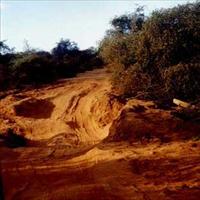
What lies under a Malawi farmer's feet that could boost food security? Try better roads.
Each year Wanangwa Munthali harvests at least 100 50kg bags of maize, plus sweet potatoes and beans. But he lives in the north of the country, 45km from the nearest town, Chitipa, and getting his produce to market is a real headache.
"Vehicles hardly use the [bad] road that runs through our village. We have to use oxcarts to ferry our produce to markets, and it's not easy," he told IRIN. "The situation is the same when we want to buy farm inputs, such as seed and fertiliser."
Transporters factor in the poor state of rural feeder roads, many unusable during the rainy season, and charge farmers accordingly. Where the road conditions are really bad they do not venture, cutting off communities from the markets they need.
A Public Expenditure Review (PER) on roads spending, with technical assistance from the World Bank, showed that funding for maintenance was inadequate.
"The official policy in the road sector is to first maintain the existing road network, followed by rehabilitation, upgrading and construction of new roads," the report noted.
"In practice, however, full maintenance has never been funded, and there continues to be a bias towards financing rehabilitation, upgrading and construction of new roads, at the expense of systematic underfunding of routine maintenance."
The cost
The PER pointed out that a poverty alleviation focus was also lacking in expenditure on roads, with access to decent roads heavily skewed in favour of wealthier areas in the country. The poor struggled with limited transport options, constraining their access to markets and opportunities.
The price tag for the maintenance and rehabilitation of Malawi's road network is estimated at US$50 million per year, covered by a Road Fund that raises money through a fuel levy, road taxes and donor aid.
Zeria Banda, communication manager at the World Bank country office, said the PER noted that while Malawi's main roads were in good condition, as much as 74 percent of the subsidiary road network was unpaved and mostly in poor shape.
Malawi's National Roads Authority estimates that it would take about US$500 million over the next five years to bring 70 percent of the country's road network up to standard, as about 11,000km of roads required rehabilitation.
The PER suggested that an increase to the fuel levy would be necessary to help pay for the work, in a country where over half the population live on less than a dollar a day and depend on subsistence farming for survival.
"The increase should be carried out gradually, however, and poverty and the social impacts of raising funding from the fuel levy should be assessed in comparison to alternatives," the PER said.
 See Also - See Also