 Back and Next - Back and Next
MALI: Gun running worsening
Thursday, June 12, 2008
Mali
has become an established transit route for weapons heading from West
Africa’s increasingly peaceful coastal states to active conflicts in
West and Central Africa, an ECOWAS expert has warned.
“There are two factors on the supply side – stabilisation in Cote d’Ivoire and in Guinea Conakry,” said Jonathan Sandy, small arms programme manager with the Economic Community of West African States (ECOWAS) in Bamako, who says regional monitoring has shown a steady uptick in the number of guns entering Mali over the last five years.
“On the demand side, some of the weapons stay in Mali and are used for criminality. Others go to active conflicts in the north of Mali, in Niger, Chad and even as far away as Sudan,” he said.
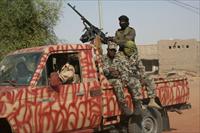
Violence between the Malian army and Touareg rebels in northern Mali has escalated in recent months, with 20 rebels reportedly killed this week in the heaviest fighting since a rebel assault in May killed 25 people.
The Malian national arms commission says the weapons it has seized range from sophisticated automatic weapons to ancient revolvers. The seized weapons were manufactured in countries including the United States, China, Egypt, Italy, the Czech Republic and Russia, according to the arms commission.
In the Timbuktu region of northern Mali, arms commission officials said they have collected over 1,300 illegal weapons over the last five years, but that at least 5,500 weapons are still in circulation in that region alone. 450,000 people live in the Timbuktu region.
ECOWAS has also registered a 100 percent increase in the number of arms being manufactured locally over the last five years. “It’s a good source of employment, but our concern is that it is not regulated,” Sandy said.
Ahmed Hamid Maiga, head of the arms commission in Timbuktu, said deepening poverty, a declining agricultural sector, and rampant population growth explains increasing domestic demand for weapons.
“People have got to eat and drink,” he said. “People think if they get a gun they will get something to eat. There are many cases of fights between pastoralists and cultivators. Other people fight over access to water sources.”
ECOWAS’s Sandy said strengthening national arms commissions in Mali and around the region and improving information and awareness is the best way to stop the spread of weapons.
“There are two factors on the supply side – stabilisation in Cote d’Ivoire and in Guinea Conakry,” said Jonathan Sandy, small arms programme manager with the Economic Community of West African States (ECOWAS) in Bamako, who says regional monitoring has shown a steady uptick in the number of guns entering Mali over the last five years.
“On the demand side, some of the weapons stay in Mali and are used for criminality. Others go to active conflicts in the north of Mali, in Niger, Chad and even as far away as Sudan,” he said.
Violence between the Malian army and Touareg rebels in northern Mali has escalated in recent months, with 20 rebels reportedly killed this week in the heaviest fighting since a rebel assault in May killed 25 people.
The Malian national arms commission says the weapons it has seized range from sophisticated automatic weapons to ancient revolvers. The seized weapons were manufactured in countries including the United States, China, Egypt, Italy, the Czech Republic and Russia, according to the arms commission.
In the Timbuktu region of northern Mali, arms commission officials said they have collected over 1,300 illegal weapons over the last five years, but that at least 5,500 weapons are still in circulation in that region alone. 450,000 people live in the Timbuktu region.
ECOWAS has also registered a 100 percent increase in the number of arms being manufactured locally over the last five years. “It’s a good source of employment, but our concern is that it is not regulated,” Sandy said.
Ahmed Hamid Maiga, head of the arms commission in Timbuktu, said deepening poverty, a declining agricultural sector, and rampant population growth explains increasing domestic demand for weapons.
“People have got to eat and drink,” he said. “People think if they get a gun they will get something to eat. There are many cases of fights between pastoralists and cultivators. Other people fight over access to water sources.”
ECOWAS’s Sandy said strengthening national arms commissions in Mali and around the region and improving information and awareness is the best way to stop the spread of weapons.
Source: IRIN NEWS http://irinnews.org
 See Also - See Also