 Back and Next - Back and Next
MOZAMBIQUE: Orphans deprived of their inheritance
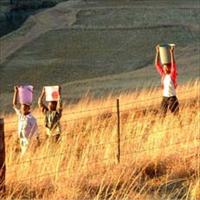
On a farm in the district of Bárue, in the central province of Manica, 16-year-old Helena Ivan hurries home with a small bundle on her head. After hours packaging potatoes, she’s allowed to take a few for herself and the two brothers she has been supporting since her parents died of AIDS-related diseases in 2005.
Of the possessions Ivan’s mother and father left – a kiosk, a house, a minibus and some goats – only the house was handed over to the children, and only because it had been registered in the name of the youngest child, Januário, who is now 12.
"My uncles took the rest. They said we weren’t old enough to take care of business, but they never come to leave us money to live on, and when we go to ask them for provisions they say they don’t have any money," said Ivan.
According to a recent study by international nonprofit organisation, Save the Children conducted in four Mozambican districts, including Bárue, widows and orphans are often stripped of their belongings by family members. The goods taken are rarely recovered.
The country’s high AIDS-related mortality rate has made cases of disinheritance widespread. Government statistics reveal that 1.6 million of the more than 10 million Mozambicans under 18 years of age are orphans. Of this total, 380,000 are thought to have lost one or both parents to AIDS.
The study showed that the explosion in the number of orphans has caused a breakdown in family support structures that traditionally provided a safety net for widows and orphans.
Little knowledge of the law
Mozambique’s civil code and a 2004 family law stipulate that when someone dies, their children and spouse are the first in line to inherit any goods or property.
However, legitimate heirs rarely lodge criminal complaints when other relatives grab property because they fear retaliation or are simply unaware of their rights and of the institutions that can help them.
The study found that fewer than half of the 376 individuals interviewed in Bárue knew about the laws relating to inheritance.
The study also noted that, in Mozambique, as in nearly all of Africa, three systems simultaneously, and often conflictingly, regulate inheritance: written law, customary law and religious law.
According to customary law, in a patrilineal society such as that in Bárue, property and lineage are passed on through males. It is presumed that daughters and widows may marry again, in which case the inherited goods would no longer belong to the deceased’s family. As a result, men inherit the house, the land, the livestock and most of the money; women receive the kitchenware, clothing and any other lands or properties.
Polygamy, which is common in the four districts studied, is another complicating factor. A man may have three or more wives and many children. Generally, the first wife has more power and influence and may be the only one with a full knowledge of the husband’s goods.
A further problem is the fact that few people leave written wills. Eight out of 10 people interviewed in Bárue considered it normal for people to make only oral declarations regarding who should be given their possessions. However, only a written document holds weight in the eyes of the law.
In Catandica, the seat of the district of Bárue, youths from a local NGO, the Rukariro Association, visit patients suffering from AIDS-related illnesses to encourage them to make wills. They explain the advantages and how to write them, but the response has been slow.
"To make a will is a complicated process in the courts, which have to deal with cases of crimes and litigation," explained the group’s coordinator, Alberto Mapondera. "This obliges them to go back to the court lots of times to acquire a will."
High prevalence, scant assistance
With approximately 96,000 inhabitants, Bárue has an estimated HIV prevalence rate of 19.3 percent, higher than the national average of 16.2 percent.
"With more adults dying of AIDS, children are left without family protection and are vulnerable to child abuse, sexual exploitation and labour," said Judas Massingue, an HIV and AIDS assistant at Save the Children-Norway in Manica.
Castigo Américo, 13, and Frederico Manuel, 16, were taken in by neighbours when they lost their parents. In exchange for sustenance, they stopped going to school and began working on farms and selling pastries at the Bárue market.
"I don’t know where the possessions that were in our house went. All I know is that the house is being rented out. My uncle never came to see me again. He was the one who asked me to stay at the neighbours’ house," Manuel said.
"I stopped going to school because the woman I was living with said I should help out with the garden and sell in the market to contribute to the household income," he said.
In Massingue’s view, "it is urgent for organisations providing assistance to orphans to be given legal knowledge in order to defend them."
Since 2004, local NGO, Foro Mulher has been distributing a manual on inheritance rights and family law in local languages in order to guide community leaders on how to protect widows and orphans.
The good news from the study is that in some villages, traditional practices are adapting to take into account the law and the impact of the epidemic.
"Culture is dynamic ... and there are cases in which traditional leaders really do help children and women," the survey said.
 See Also - See Also