 Back and Next - Back and Next
SOMALIA: “TFG on brink of collapse”
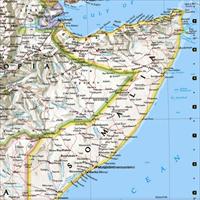
The widening split between Somalia's leaders could lead to the total collapse of the transitional federal government (TFG), a Nairobi-based regional analyst, who requested anonymity, has warned.
The split has widened as insurgents gain ground across Somalia, taking control in recent days of large parts of south and central regions, according to civil society sources.
Insurgents comprising Islamist Al-Shabab, nationalists and militia clans opposed to foreign forces have over the past two months taken control of more than a dozen localities, they said.
"The success of the insurgents is a reflection of the desire of ordinary Somalis to end the anarchy, coupled with the TFG's [Transitional Federal Government] inability to restore order," Timothy Othieno, a regional analyst at the London-based Overseas Development Institute (ODI), said.
"There is little doubt that the anarchic situation, with the inability of the TFG to restore order, security and provide the basic services, has enabled the Islamists to be ever more popular," he added.
According to Othieno, the only recent experience Somalis have had with peace and a sense of security was the six months in 2006 when the Islamists controlled vast parts of the country.
"That was the first time in nearly 15 years that witnessed a return to peace in Somalia, albeit only briefly. It is this sense of ‘security’ that Somalis crave and are willing to secede some of their freedoms to be safe from harm," he added.
Blame game
Somali legislators disagree on whether the situation is getting out of control, but blame their leaders.
"The TFG is not on the brink of collapse; it has already collapsed," Abdi Ahmed Dhuhulow, a parliamentarian allied to Prime Minister Nur Hassan Hussein, told IRIN on 17 November.
"He [President Abdullahi Yusuf] started immediately after his election [in 2004] by trying to usurp the power of parliament; he fought with Sharif Hassan [former parliamentary speaker], then with Ali Gedi [former prime minister] and he will not stop until he gets his way," Dhuhulow said.
However, Abdirashid Mohamed Iro, an MP allied to Yusuf, disagreed, saying although there was a "very serious split" between the president and the prime minister, the TFG had not collapsed.
So far, Yusuf and Hussein have failed to agree on a new cabinet. On 17 November, the UN Special Representative for Somalia, Ahmedou Ould-Abdallah, appealed to the leaders to put aside their differences.
He urged the government to agree on a new cabinet quickly, saying a continuing power struggle did not serve Somalia’s interests, particularly as there was now an agreement to establish a broad-based unity government.
Way forward
After months of on-off talks in Djibouti, representatives of the TFG and a faction of an Eritrea-based opposition alliance signed an agreement to cease hostilities in August.
"The TFG and the ARS [Alliance for the Re-liberation of Somalia] Djibouti wing must conclude the accord and cement their partnership without further delay, if they are not to be overtaken by events on the ground," the Nairobi analyst said.
Even then, the process faced serious challenges. Apart from Yusuf's resistance, he added, a determined opposition and the presence of Ethiopian troops in Somalia had continued to undermine public confidence in the Djibouti process.
It had also strengthened the hand of those insurgents who favour a military solution. "Should the Djibouti peace process fail, then the TFG is likely to disintegrate and southern Somalia be carved up between rival Islamist factions, some of them - like Al-Shabab - committed to an agenda of regional destabilisation and violence," he warned.
However, Othieno of ODI said it would be wise to allow the Somalis "to decide how they want to design their own state", adding, "I am not saying to neglect Somalia, but not interfere in their ‘state-making’ processes."
Conflict, drought and hyperinflation have combined to create a humanitarian crisis in Somalia, with aid workers estimating that 2.6 million Somalis need assistance.
That number is expected to reach 3.5 million by the end of the year if the situation does not improve, according to the UN.
 See Also - See Also