 Back and Next - Back and Next
SOUTH AFRICA: Corruption could harm HIV/AIDS efforts
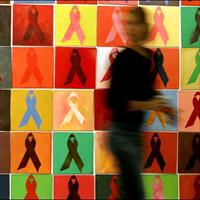
No one can say for sure why South Africa, which has devoted more resources to combating HIV/AIDS than any other country on the continent, still has the highest number of infections in the world.
A new study published jointly by the South African Institute for Security Studies (ISS), a think-tank, and Transparency International Zimbabwe, part of an international coalition against corruption, attempts to offer some answers.
The report, A Lethal Cocktail, asks why dramatic increases in both government and donor spending on South Africa's HIV/AIDS prevention and treatment programmes in recent years have not translated into "positive results".
The study concludes that "corruption and poor oversight are a potentially lethal cocktail when combined with the rapacious AIDS disease".
The difficulty of following and accounting for AIDS money coming from multiple government and donor sources, some of it earmarked for the public sector and some flowing directly to non-governmental organisations (NGOs) increases the potential for corruption. However, the authors note the difficulty of disentangling actual instances of corruption from basic mismanagement and weak systems.
Most HIV/AIDS funding is channelled through provincial health departments, which have struggled to absorb and manage such large sums. The result has been several cases of provinces underspending their HIV/AIDS budgets.
Few of the people working in the health and HIV/AIDS sectors interviewed for the study could point to cases of "grand" corruption, but they reported many incidents of "petty corruption and mismanagement of resources": doctors charging for services that are supposed to be free, or the theft of antiretroviral (ARV) drugs from hospitals.
A Lethal Cocktail also highlights the role poverty plays in encouraging HIV-positive people to engage in corrupt practices, such as registering at more than one treatment centre and then selling the extra ARVs, or bribing a doctor to certify them for a disability grant.
But according to the study, it is the politicisation of HIV/AIDS in South Africa that has created the greatest space "for abuses of power by political actors in support of controversial views".
The authors argue that President Thabo Mbeki's questioning of the link between HIV and AIDS and the efficacy of ARVs has afforded protection to senior political figures and health officials who have become actively involved in the promotion of alternative AIDS remedies, or intervened on behalf of people like the controversial vitamin salesman, Matthias Rath.
Other problems with South Africa's HIV/AIDS programmes - like the delays in setting up tenders for the procurement of ARV drugs, the one-year lapse of the major prevention programme, Khomanani, and the relatively slow pace of the ARV treatment rollout - are attributed to a "lack of political commitment".
The study suggests that "the narrow legal definition of 'political corruption' ignores certain aspects, such as the lack of political will to curb a health problem or implement a life-saving policy", but Nicoli Nattrass, director of the AIDS and Society Research Unit and Professor of Economics at the University of Cape Town, is unconvinced.
"Just because Manto [Health Minister Manto Tshabalala-Msimang] supports [Matthias] Rath, doesn't mean Manto is corrupt," she said. "I'd say the issue around treatment is definitely political will. As far as rising [HIV] prevalence [is concerned], the jury's out on that question. South Africa is sitting at the bottom of a huge continental pandemic, and that's not in and of itself a sign of policy failure."
Nattrass said the report's calls for greater accountability and transparency "can only be a good thing", but she was worried that the study could feed into a "backlash" against HIV/AIDS efforts resulting from recent revelations that UNAIDS and the WHO overestimated global HIV infections.
 See Also - See Also